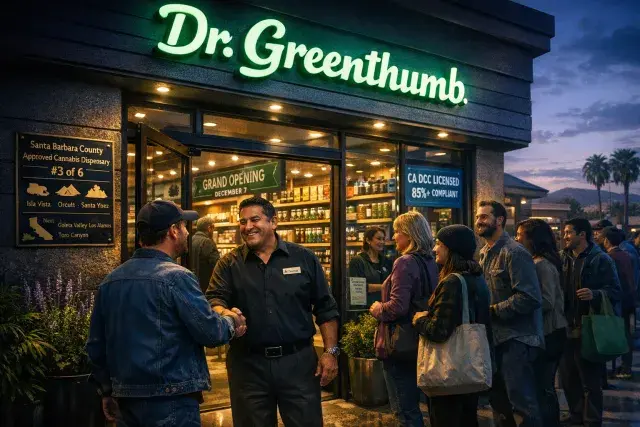

Madison Heights City Council has trimmed licenses and designated parcels for medical and recreational marijuana operations, aiming to prevent industry dominance and encourage varied commercial growth. Officials describe the move as timely "rightsizing" after revoking a non-compliant license and noting low demand for others. The unanimous February decision signals a pivot toward a balanced economy in this Detroit suburb.
Revocation Triggers Ordinance Overhaul
A marijuana business license on Dequindre Road, part of five planned "stacked" facilities, was revoked at the end of 2025 for failure to launch after two years of noncompliance. Mayor Corey Haines cited this episode as a wake-up call. "We don't necessarily want to be saturated with this one type of industry, because other businesses still need to be competitive and make a profit," he said. The council eliminated that license and pruned others with no applicants, aligning the rules with the city's master plan for diverse enterprises.
Specific Reductions Reshape Green Zone
The amended ordinance slashes adult-use licenses: retailers and processors drop from five to four, transporters to one, safety compliance facilities to four, and Grower Class C from 25 to eight. Medical marijuana faces parallel cuts, with retailers, processors, and growers limited to four each, plus one transporter and four compliance sites. Facilities now confine to precise parcels within the "green zone," shrinking from broader zoning districts with setbacks from schools and residences. Three approved operations thrive—Liberty Cannabis at 29600 Stephenson Highway, Puff Cannabis at 2 Ajax Drive, and Quality Roots at 350 E. 14 Mile Road—generating tax revenue and fees.
From Competition to Community Benefits
Since authorizing medical marijuana in 2019 and adding recreational later, Madison Heights used a scoring system for licenses, weighing experience, finances, security, compliance, and site fit. Applicants pledged community investments, now funneled to the Madison Heights Community Foundation for signage, events, murals, and public safety equipment. City Manager Melissa Marsh reports success: businesses occupy vacant properties, boost local activity, and fund improvements. Yet council members like Sean Fleming question excess capacity amid a new 24% state sales tax, favoring stability over expansion.
Outlook Favors Economic Variety
Councilmember Emily Rohrbach welcomes the "rightsizing," noting past lawsuits forced unwanted growth and drained resources. "We're hoping the current council and future councils stick with where we are now, which will allow for a more diverse mix of investment," she said. By curbing saturation, the city positions itself for broader vitality, reflecting wider Michigan trends where municipalities balance cannabis revenue against overreliance on a single sector.