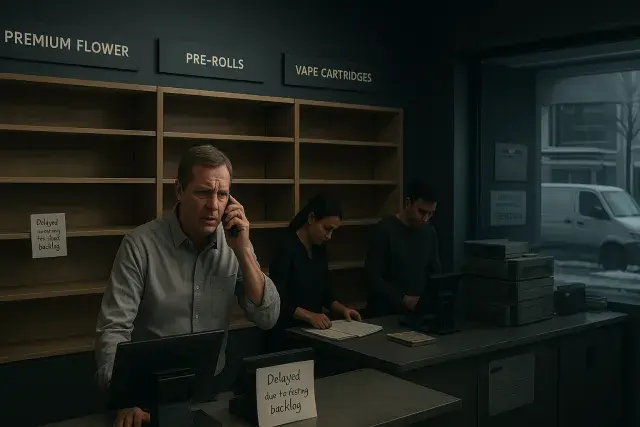
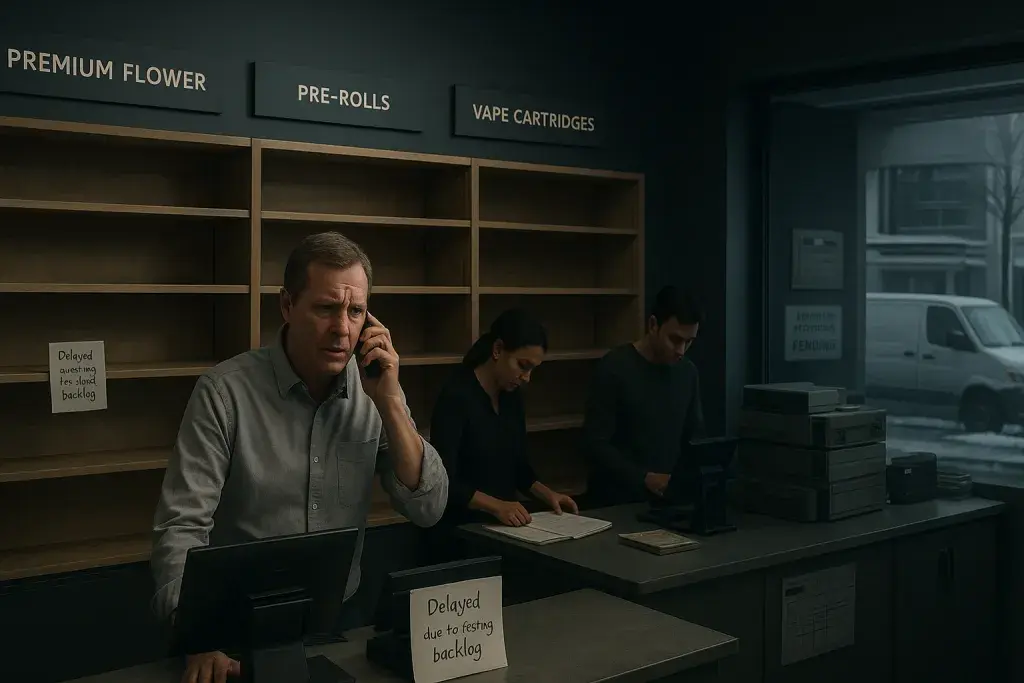
One of Minnesota's five licensed cannabis testing laboratories has announced it is shutting down operations, citing costs that outpace what the current regulatory framework allows it to recover. The closure adds fresh pressure to a supply chain already struggling with testing backlogs - and for licensed adult-use retailers waiting on compliant product, the timing couldn't be worse. Fewer labs means longer queues, and longer queues mean empty shelves.
Legends Technical Services said in a statement that "under the current regulatory framework, we do not foresee an ability to continue to meet our client expectations in an economically viable manner." That language is blunt, and it points to a structural problem that other emerging state markets have encountered before. Third-party cannabis testing labs - required by regulation to verify potency, contaminants, pesticide residues, and other safety parameters before any product can receive a certificate of analysis and enter the retail supply chain - operate on thin margins. They carry significant capital costs: specialized equipment, certified chemists, quality management systems, and state licensing overhead. When testing fees are capped or suppressed by market conditions, or when the volume of samples moving through the pipeline doesn't justify the fixed cost base, labs fail. Other regulated markets have grappled with this exact dynamic, and some states - including those exploring how dispensary software maine operators use to track compliance workflows - have watched lab consolidation create downstream disruptions for retailers that can persist for months.
At Grey Area, a licensed adult-use dispensary on Grand Avenue in St. Paul, owner William Drexler is living the consequences in real time. Flower, pre-rolls, and vape cartridges - among the highest-demand SKUs in any adult-use retail environment - have been stuck in the testing pipeline since he received his license. "We haven't had problems with drinks or edibles yet, but for the adult-use products that's where we've seen the delays," Drexler said. "We haven't even gotten pens in yet." He described a pattern of vendors citing testing as the holdup, offering vague timelines that slip week to week. That's a familiar operational posture for suppliers who genuinely don't control when a COA gets issued - but for a retailer managing cash flow and customer expectations, it translates directly into lost revenue and frustrated foot traffic.
Why Lab Economics Break Down in Early-Stage Markets
The math on cannabis testing lab operations is unforgiving in a young market. Labs must invest upfront - in high-performance liquid chromatography equipment, mass spectrometers, and the staff to run them - before sample volume reaches the level needed to sustain that infrastructure. In a state like Minnesota, where the adult-use licensing rollout is still relatively recent, that volume may not yet exist at scale. At the same time, cultivators, processors, and manufacturers cannot legally ship product to a retailer without a passing COA, which means every batch must clear a lab before it hits a wholesale menu. When lab capacity shrinks, the bottleneck becomes the regulatory gate itself - not cultivation output, not retailer demand.
Dropping from five licensed labs to four sounds manageable on paper. In practice, though, the remaining facilities absorb the displaced client load immediately. Queue times lengthen. Turnaround - already measured in days to weeks for a full panel of required tests - stretches further. Producers who were already managing uncertain timelines now have even less certainty to pass down the chain. That's exactly what Drexler described: vendors who can't give a delivery date because they themselves are waiting on testing, and who have stopped offering estimates at all.
The Retail Impact Is Direct and Immediate
For a dispensary operator, a thin wholesale menu is an inventory management problem with compounding consequences. When high-velocity SKUs like flower and pre-rolls are unavailable, operators lose the reliable transaction drivers that support everyday cash flow. Customers who come in looking for adult-use staples and leave empty-handed may not return the next week. Budroom staff can't upsell across a category that doesn't exist on the shelves. And when product does eventually arrive in batches - after weeks of delay - operators face the opposite challenge: too much hitting at once, straining receiving, compliance logging, and POS updates simultaneously.
Drexler put it plainly: "It's getting frustrating for everyone involved." That frustration runs from the cultivator holding finished product in queue to the retailer calling growers weekly for updates, to the end consumer who walked into a legal store expecting legal product and found gaps. This is the part of supply chain friction that regulation alone can't paper over - it has to be built into lab funding structures and licensing policy from the start.
What Regulators and the Industry Should Take Away
Minnesota's Office of Cannabis Management, which had not responded to press inquiries at the time of this report, is now facing a pointed question: what is the state's plan to maintain sufficient lab capacity as the adult-use market scales? Lab licensing frameworks, fee structures, and the reimbursement model that determines what cultivators pay for testing all factor into whether a third-party testing business can survive. If the answer to lab insolvency is simply "the market will sort it out," the near-term result is consolidation, longer backlogs, and slower product flow to licensed retailers - which undermines the very supply chain the regulatory system is designed to protect.
Other states that have moved through early adult-use rollout have found that lab infrastructure requires deliberate policy attention - not just a licensing checkbox. The exit of Legends Technical Services is a signal worth taking seriously, not as an isolated business failure, but as an indicator that the cost structure of compliance in Minnesota's market may need recalibration before the remaining labs face the same pressure.