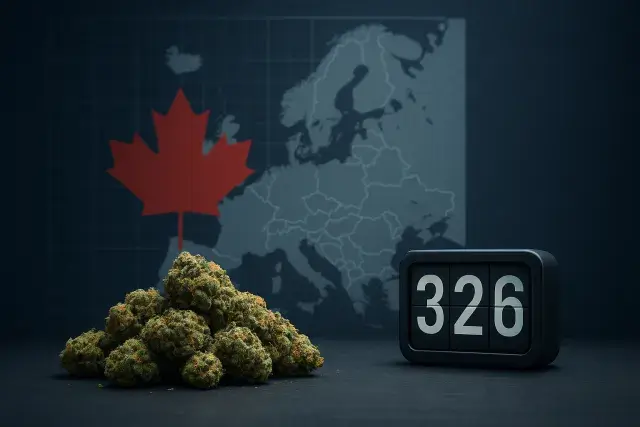
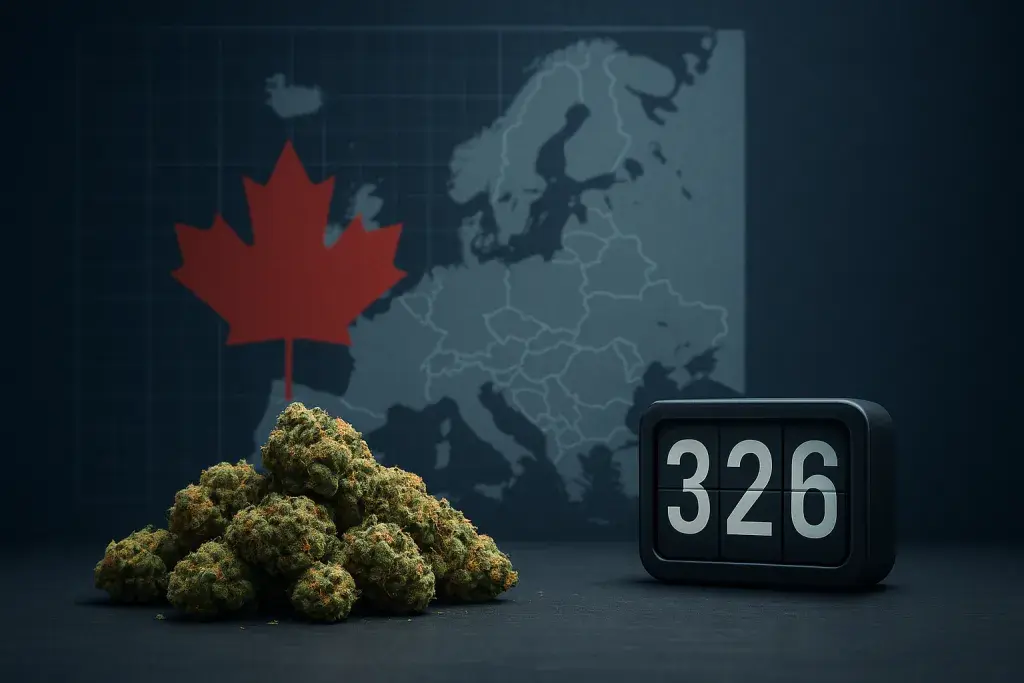
Border and customs officials across Europe are reporting a sharp rise in cannabis seizures, and they're pointing squarely at Canada's oversupplied legal market as the source. The claims, published Thursday in The Telegraph, tie the surge directly to Canada's 2018 adult-use legalization law, arguing that licensed cultivation has produced far more flower than domestic and export markets can absorb. Cannabis advocates dispute the framing, noting that no direct evidence links the seized product to specific licensed producers.
The underlying economics aren't new to anyone who has watched Canada's licensed producer sector limp through years of oversupply. Millions of pounds of unsold flower have piled up in vaults and warehouses, some of it eventually destroyed when buyers couldn't be found in emerging European markets like Germany. That glut has pushed wholesale prices down domestically, and for operators running a licensed cultivation business, thin margins create real incentive to move product through whatever channel pays best - legal or not. This is a dynamic that regulators in every legal market, from Alaska to Alberta, understand: when compliant retail struggles to clear inventory, whether it's a mainland Canadian grow or a cannabis retail platform for Alaska managing dispensary shelf turnover, the market finds pressure points. Seed-to-sale tracking systems exist precisely to catch that kind of leakage before it becomes a cross-border problem. cannabis retail platform for Alaska
What the numbers actually show, and what they don't
Canadian border police reported seizing 46 tons of cannabis bound for Europe over 16 months, a threefold jump. Belgium's top customs official told The Telegraph his agency intercepted 32 tons in 2025, with 21 tons traced to Canada. Those figures describe volume, not origin at the license level. StratCann has pointed out there's no established chain connecting the diverted product to particular licensed producers, which matters enormously for how regulators and industry groups respond. Blaming "Canadian legalization" broadly is a different claim than identifying which cultivation licenses, distribution permits, or compliance gaps actually allowed product to leave the regulated chain of custody.
Diversion isn't a Canada problem, it's a treaty problem
American operators have heard this song before. State regulators in several U.S. markets have long alleged that organized crime uses legal cultivation licenses as camouflage, growing cannabis that never touches a dispensary shelf or POS terminal and instead flows into interstate illicit trade. That same concern surfaced during recent DEA rescheduling hearings, where officials weighed whether the U.S. could credibly meet diversion-control obligations under decades-old international drug treaties if marijuana moved to a lower schedule. Canada is arguably already out of compliance with those same treaty terms, according to international law specialists, yet has faced no direct penalty. That inconsistency matters for U.S. policymakers watching how treaty enforcement actually works, or doesn't, in practice.
Why this matters beyond the border
For operators and investors, the lesson isn't really about Canada specifically. It's about what happens when licensed supply outpaces legal demand for years running. Oversupply doesn't just crush wholesale pricing and squeeze margins under tax regimes like 280E - it creates diversion pressure that regulators, insurers, and compliance teams eventually have to answer for. Track-and-trace systems, COA requirements, and compliant packaging rules exist to keep product inside the regulated chain, but they only work if enforcement keeps pace with production. As U.S. markets debate rescheduling and interstate commerce, Europe's seizure numbers are a preview of what happens when that balance slips.