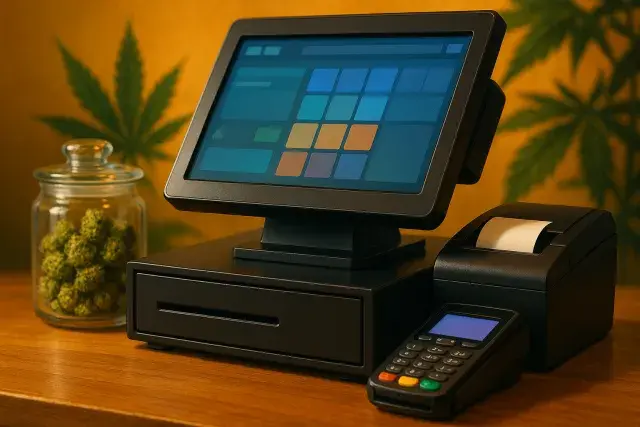
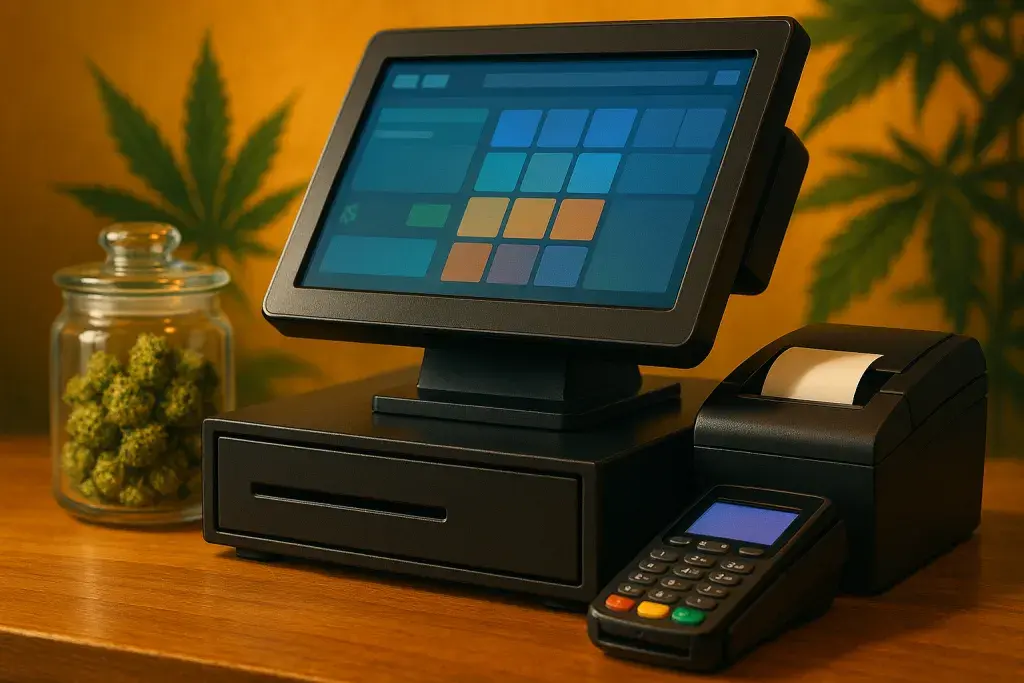
Running a cannabis retail store without a purpose-built technology stack is a compliance disaster waiting to happen. Unlike most retail environments, dispensaries operate under state-mandated tracking requirements, strict inventory auditing, and in many jurisdictions, restrictions on standard payment processing. The point-of-sale system sitting at your counter isn't just a cash register - it's the operational backbone of your entire business.
Choosing the right marijuana dispensary POS system means balancing regulatory compliance, hardware durability, staff usability, and payment flexibility all at once. That's a harder task than it sounds, especially when the market is crowded with vendors making similar promises. Understanding what constitutes proper cannabis POS hardware - the physical terminals, receipt printers, barcode scanners, and payment devices that make up your setup - is just as critical as evaluating the software running on it.
This guide breaks down every layer of the decision: from the hardware components you'll need on day one, to the compliance features that will protect your license, to the payment workarounds that actually work in a cash-heavy industry. Whether you're opening your first dispensary or upgrading an aging setup, the goal is to give you a framework that removes guesswork and focuses on what actually matters at the operational level.
Understanding What a Dispensary POS System Actually Does
More Than a Cash Register
A dispensary cash register in the traditional sense - a drawer, a screen, a receipt printer - is the visible tip of a much larger system. In cannabis retail, the POS platform manages inventory in real time, connects to state traceability systems like Metrc or BioTrackTHC, tracks employee sales, enforces purchase limits per customer, and generates the compliance reports your license requires. None of that happens with off-the-shelf retail software.
The software layer is what most operators focus on when comparing systems. But software is only as functional as the hardware running beneath it. A slow touchscreen terminal, an unreliable barcode scanner, or a payment terminal that disconnects mid-transaction will erode the benefits of even the best software platform. The two components must be evaluated together.
The Compliance Function
Every state with legal cannabis has a mandatory seed-to-sale tracking requirement. When a customer purchases a product at your counter, that transaction must be logged and reported - sometimes in near real time. Your POS system is the tool that makes this happen automatically. Systems built specifically for cannabis retail have direct API integrations with state tracking platforms, which means your staff doesn't need to manually enter data into a separate government portal.
A system without verified compliance integrations isn't just inconvenient - it's a liability. Dispensaries have lost licenses due to inventory discrepancies that a properly configured POS would have flagged automatically. This is why repurposing a generic retail system, no matter how polished, is a poor fit for cannabis operations.
Inventory and Customer Management
Cannabis point of sale equipment typically supports a dual function: managing what's on your shelves and managing who's buying it. Customer profiles store purchase history, preferences, and ID verification records. Inventory tools track every gram sold, flag low stock, and reconcile physical counts with system records. When these two functions are synchronized within a single platform, operators gain a level of operational visibility that dramatically reduces shrinkage and compliance errors.
Core Cannabis Retail Hardware Components
POS Terminals and Touchscreens
The terminal is the most visible piece of cannabis retail hardware in any dispensary. Most modern cannabis-specific platforms run on iPad-based setups or purpose-built Android terminals. iPad systems offer flexibility and are easy to replace, but they require sturdy enclosures and stands designed for commercial use. Dedicated hardware terminals tend to be more durable and often come pre-configured by the POS vendor, reducing setup time.
Screen responsiveness matters more than most operators expect before opening. Budtenders handle dozens of transactions per shift, often while customers are waiting and asking questions. A laggy or unresponsive screen slows the entire transaction flow and increases the chance of input errors that create inventory discrepancies.
Barcode Scanners and Label Printers
Every cannabis product entering your store arrives with a tracking label. Your staff will scan these labels during receiving, restocking, and sales. A reliable 2D barcode scanner that reads both standard barcodes and QR codes is non-negotiable. Wireless scanners offer mobility in larger retail footprints; wired models are more reliable in high-volume environments where battery management becomes a chore.
Label printers serve a different but equally important function. If your dispensary breaks down bulk products or creates in-house packages, you'll need to print compliant labels with the correct state-mandated information. Many cannabis POS platforms have integrated label printing workflows, but they require compatible printer models - usually thermal printers from specific manufacturers. Confirm compatibility before purchasing hardware independently.
Receipt Printers and Customer-Facing Displays
Thermal receipt printers are standard across retail and cannabis is no exception. The key considerations are connection type (USB, Ethernet, or Bluetooth), paper width, and compatibility with your POS software. Bluetooth models introduce potential connectivity issues in dense retail environments; Ethernet connections are more stable for high-volume stores.
Customer-facing displays - secondary screens that show transaction totals and product details to the buyer - are increasingly common in dispensary setups. They add transparency to the transaction and reduce disputes about pricing. Some cannabis POS vendors offer integrated customer display solutions; others require third-party hardware. Either way, it's worth including in your initial hardware budget rather than retrofitting later.
ID Scanners and Age Verification Hardware
Age verification is a legal requirement in every cannabis market. Manually inspecting IDs introduces human error and creates compliance exposure. Dedicated ID scanner hardware reads the barcode or magnetic stripe on government-issued IDs and cross-references the data against age requirements before the transaction can proceed. Some systems flag expired IDs or IDs from jurisdictions with unusual formatting. In markets where medical and recreational sales coexist, ID scanners can also help route customers to the correct product categories based on their registration status.
Evaluating Dispensary Cash Register and Payment Terminal Options
Why Cannabis Payment Processing Is Different
Most major credit card networks have historically declined to process cannabis transactions, citing federal law. This has created a fragmented payment landscape where dispensaries cobble together workarounds that vary in reliability, cost, and legal risk. Understanding the landscape before selecting your weed shop payment terminal is essential, because the wrong choice can result in account terminations, fines, or customer-facing payment failures.
The most common payment methods currently used in cannabis retail include cash, PIN debit, cannabis-specific payment apps, and cashless ATM systems. Each comes with tradeoffs. Cash is universally accepted but expensive to manage and a security risk. PIN debit through compliant processors works but carries transaction fees that add up quickly. Cashless ATM systems operate in a legal gray area and are increasingly being shut down by card networks.
Cash Management Infrastructure
Despite the growth of digital payment alternatives, most dispensaries still process a significant share of transactions in cash. This means your dispensary cash register setup needs to include a robust cash management infrastructure: heavy-duty cash drawers, bill validators to detect counterfeit currency, and cash counters for end-of-day reconciliation. Some dispensaries use cash recycler machines - automated devices that accept, store, and dispense cash - which reduce theft risk and speed up closing procedures.
Cash handling also creates compliance documentation requirements. Your POS system should generate detailed cash reconciliation reports that match transaction records, giving you a paper trail that satisfies both internal audits and state inspectors.
PIN Debit and Compliant Payment Solutions
PIN debit processing through banking-compliant processors is currently the most stable electronic payment option for dispensaries. Transactions are processed through debit networks rather than card networks, which sidesteps many of the federal banking restrictions. Customers enter their PIN at a weed shop payment terminal, and the amount is debited directly from their bank account. The experience mirrors a standard debit card transaction from the customer's perspective.
Not all PIN debit processors are equal. Some use technically compliant structures while others use misclassification tactics that expose the merchant to account termination. Before committing to any payment processor, ask detailed questions about how transactions are classified, which acquiring banks are involved, and what their track record is with cannabis merchants specifically. The hardware your payment terminal requires will depend on which processor you select.
Emerging Payment Technologies
A small but growing number of cannabis-specific financial technology companies are building payment infrastructure designed from the ground up for the industry. These include purpose-built payment apps, cannabis-focused bank accounts, and ACH-based payment solutions. Some state-licensed cannabis banking programs are beginning to offer more stable electronic payment options as well. The landscape is evolving, so building payment flexibility into your hardware setup - rather than locking into a single terminal type - gives you room to adapt as better options become available.
Compliance Features That Should Drive Your Software Selection
State Traceability Integration
Metrc is the most widely used state traceability system in the U.S., but other systems like BioTrackTHC and MJ Freeway's state portal are in use depending on your jurisdiction. Your POS platform must have a verified, maintained integration with your state's specific system. Verified means the integration is officially recognized by the state - not just a workaround built by the vendor. Ask any POS vendor for documentation of their state certification status before signing a contract.
Integration quality matters as much as integration existence. Some platforms sync with state systems smoothly and automatically; others require manual reconciliation steps that eat staff time and introduce error risk. Asking for a demo of the compliance workflow - specifically the receiving, sales, and end-of-day reporting steps - gives you a realistic picture before you commit.
Purchase Limit Enforcement
Every cannabis market sets legal limits on how much a customer can purchase in a single transaction or within a defined time period. Your POS system should enforce these limits automatically at the point of sale, preventing your staff from completing a transaction that would put them in violation. This is especially important in dual-use markets where medical and recreational limits differ, or in states with potency-based purchase limits that require calculation at the point of sale.
Audit Trails and Reporting
State inspectors reviewing a dispensary's records expect complete, unaltered transaction histories. Your cannabis point of sale equipment should generate immutable audit logs that capture every transaction, void, discount, employee action, and inventory adjustment. These logs should be exportable in formats that your state requires, and they should be accessible quickly when an inspector requests them on short notice.
Beyond compliance, detailed reporting helps you run a better business. Sales by product category, by time of day, by employee - this data informs purchasing decisions, staffing schedules, and promotional strategy. Most cannabis-specific POS platforms include analytics dashboards; the depth and usability of those dashboards varies significantly between vendors.
Hardware Durability, Setup, and Support Considerations
Commercial-Grade Hardware vs. Consumer Devices
A dispensary is a commercial retail environment. The hardware running it should be rated for commercial use - which means it should withstand continuous operation, resist dust and minor liquid exposure, and hold up to daily physical handling by multiple staff members. Consumer-grade tablets and laptops technically run cannabis POS software, but they weren't designed for the wear patterns of an active retail floor.
Commercial-grade terminals, enclosures, and peripherals typically carry longer warranties and are supported with faster replacement programs. When a terminal fails mid-shift, every minute of downtime costs sales and damages customer experience. Factor hardware durability and vendor replacement speed into your total cost of ownership calculation.
Wired vs. Wireless Setups
Wireless setups offer flexibility, particularly in dispensaries with multiple service stations, drive-through windows, or floor staff using mobile devices for customer engagement. But wireless systems introduce dependency on network stability. A router failure or Wi-Fi interference can take your entire POS offline. Dispensaries with multiple terminals should consider a hybrid setup - primary terminals on wired Ethernet connections, with wireless capability for secondary or mobile use cases.
Network infrastructure is often an afterthought during dispensary buildouts. It shouldn't be. Run dedicated network lines during construction, not after. Adequate bandwidth, a business-grade router, and a backup 4G connection for emergencies are baseline requirements for any cannabis retail hardware setup that needs to stay online reliably.
Vendor Support and Training
Even the best cannabis point of sale equipment fails eventually, and even the most intuitive software confuses new staff. The support infrastructure your vendor provides will define your experience more than any individual feature. Ask specifically about support hours, response time guarantees, and whether support is handled by in-house staff or third-party contractors. Dispensaries often operate seven days a week, including evenings - if your vendor's support line is staffed only during standard business hours, that's a real operational risk.
Training resources also matter. Staff turnover in cannabis retail is high, and onboarding new budtenders efficiently requires clear training materials, intuitive interface design, and ideally a demo or sandbox mode where new hires can practice without affecting live inventory. Ask for a demo that puts you in the position of a new employee learning the system for the first time.
Total Cost of Ownership and Budget Planning
Understanding the Full Hardware Cost
When vendors quote hardware costs, the number rarely covers everything. A complete cannabis retail hardware setup for a single register station typically includes a terminal, cash drawer, receipt printer, barcode scanner, ID scanner, and potentially a customer-facing display. Multiply that by the number of stations you plan to run, then add label printers, network equipment, and mounting hardware. The total can be substantially higher than the single-station number in a sales pitch.
Some vendors offer hardware bundles at a discount; others lease equipment rather than selling it outright. Leasing reduces upfront cost but increases total expenditure over time and may lock you into a specific vendor. Owning hardware outright gives you more flexibility, particularly if you need to switch POS platforms later - though some systems only run on vendor-specific hardware, which limits portability.
Software Licensing and Transaction Fees
Most marijuana dispensary POS systems charge a monthly or annual software licensing fee per terminal or per location. Beyond that base fee, some platforms charge per-transaction fees, fees for compliance reporting features, or fees for integrations with third-party tools like loyalty programs, online menus, or delivery management software. Mapping out the true monthly cost - including all fees, not just the base license - gives you a more accurate comparison between vendors.
Payment processing fees are a separate line item entirely. PIN debit processing typically costs between one and three dollars per transaction or a percentage of the sale, depending on the processor. For a high-volume dispensary, these fees can represent a meaningful monthly expense. Build them into your financial model before committing to a payment solution.
Scaling Considerations
If you plan to open multiple locations, your POS vendor's multi-location capabilities become a critical evaluation criterion. Consolidated reporting across locations, centralized inventory management, shared customer profiles, and unified compliance reporting are features that matter at scale. Some platforms handle multi-location operations well from the start; others were built for single-location operators and added multi-location features as an afterthought. The operational friction of the latter becomes apparent quickly when managing two or more stores.
Frequently Asked Questions
Can I use a generic retail POS system like Square or Shopify for my dispensary?
These platforms prohibit cannabis sales in their terms of service and will terminate accounts that violate this policy. Beyond the terms-of-service issue, generic retail platforms lack the state traceability integrations, purchase limit enforcement, and compliance reporting features that cannabis licenses require. A cannabis-specific system is not optional - it's a licensing requirement in most jurisdictions.
What hardware do I absolutely need on day one versus what can wait?
On day one, you need at minimum a POS terminal, cash drawer, receipt printer, barcode scanner, and ID verification hardware. Label printers are necessary if you're pre-packaging products in-house. Customer-facing displays and advanced cash management equipment like bill recyclers are useful but can be added after launch once you understand your transaction volume and workflow patterns.
How do I verify that a POS vendor's compliance integration actually works with my state's traceability system?
Ask the vendor for their official state certification documentation. Then contact your state's cannabis regulatory agency directly to confirm the vendor is on the approved or verified integrator list. Running a live demo that walks through a compliant receiving workflow and a test sale with state reporting is also a practical way to verify functionality before signing a contract.
What should I do if my POS system goes offline during operating hours?
Any credible cannabis POS platform should offer an offline mode that allows transactions to continue locally and syncs with the cloud once connectivity is restored. Ask vendors specifically about offline functionality and what data is retained during an outage. Additionally, having a backup 4G connection that your POS network can failover to reduces the likelihood of a full outage in the first place.
Are cashless ATM systems a safe long-term payment solution for my dispensary?
Cashless ATM systems operate by routing transactions through ATM networks using a workaround that misclassifies the merchant type. Card networks have been actively shutting these systems down, and dispensaries using them have experienced sudden payment processing failures. They carry significant operational risk and should not be treated as a stable long-term solution. PIN debit through a verified compliant processor is a more defensible approach.
How many POS terminals does a single-location dispensary typically need?
The right number depends on your expected daily transaction volume and floor layout. A small dispensary doing under one hundred transactions per day can often operate with two terminals - one primary and one backup. Higher-volume stores or those with separate express lanes, consultation areas, or drive-through windows may need three to five terminals. Having at least one backup terminal that can be activated quickly during peak hours or hardware failures is a practical operational safeguard regardless of store size.