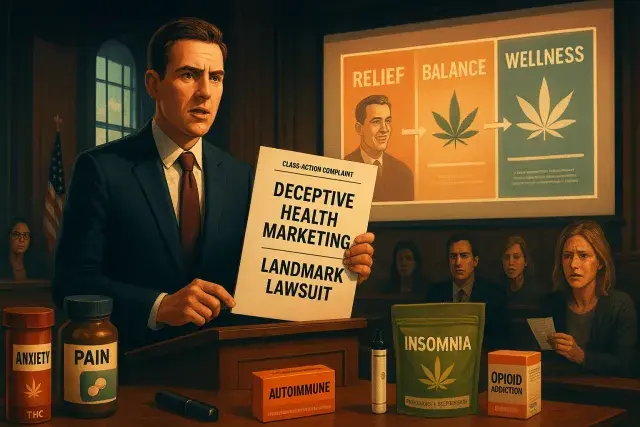
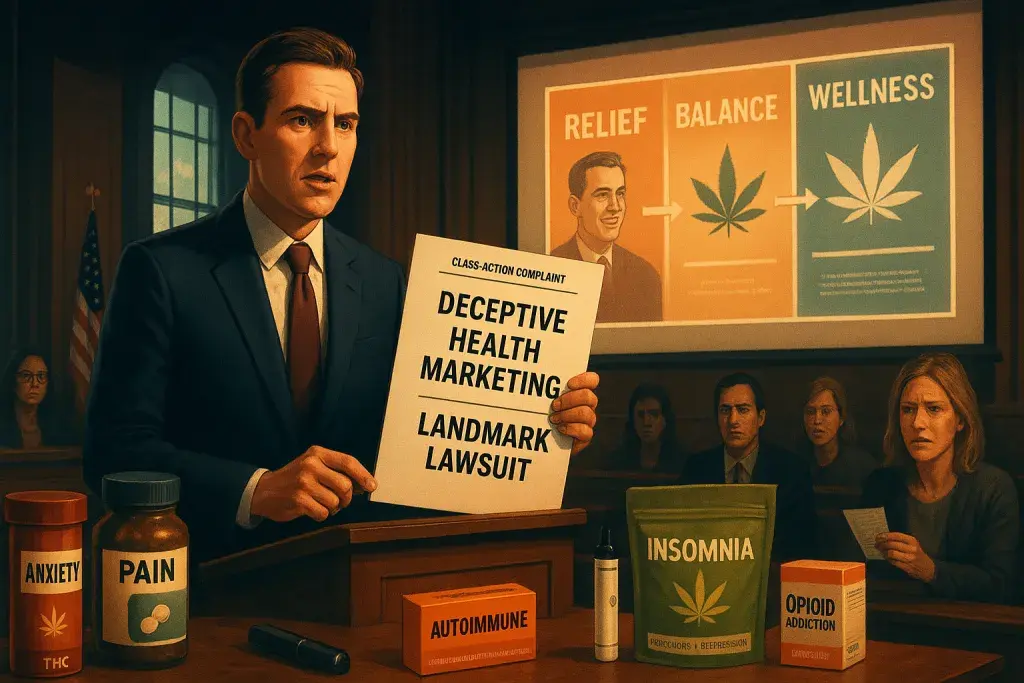
A federal class-action complaint filed in early May takes direct aim at three of Chicago's largest multi-state cannabis operators - Cresco Labs, Green Thumb Industries, and Verano Holdings - alleging they deceptively marketed cannabis products as treatments for a range of medical conditions while downplaying documented health risks. The 300-plus-page complaint draws a pointed parallel to the tobacco industry's decades-long effort to obscure the dangers of its products from consumers. For licensed cannabis operators across the country, the suit raises questions that go well beyond this specific litigation.
The complaint, filed by Burke Law Group partner Patrick Kenneally, centers on a straightforward but legally charged argument: that these companies promoted THC products as remedies for conditions including anxiety, pain, insomnia, autoimmune disorders, and even opioid addiction - none of which cannabis is FDA-approved to treat - while failing to adequately warn buyers about risks tied to high-potency THC. Kenneally draws the tobacco analogy deliberately, arguing that the science linking frequent cannabis use to psychosis, depression, and anxiety is "unassailable." Compliance professionals tracking how dispensaries handle product claims and labeling should pay close attention - and operators working with a pos system for dispensary california or any other state-level retail platform should be asking whether their current marketing language and labeling workflows are defensible under this kind of scrutiny.
What the Complaint Actually Alleges
The suit does not simply allege that cannabis is harmful. It alleges a calculated marketing strategy - the complaint's own language - in which operators used broad therapeutic claims to drive purchase decisions among consumers who were not given an accurate picture of what they were buying. The economic harm theory is equally direct: plaintiffs argue they overpaid, or would not have purchased at all, had the risks been disclosed.
Kenneally specifically cites a 2017 National Academy of Sciences report finding "substantial evidence of a statistical association between cannabis use and the development of schizophrenia or other psychoses, with the highest risk among the most frequent users." He argues there is a large population of consumers experiencing mental health consequences they are not connecting to their cannabis use - and that better-informed labeling, package inserts, or in-store signage could change that.
Verano Holdings pushed back firmly, noting that it operates in compliance with applicable state laws and regulations, including each state's product labeling, testing, and warning requirements. The company also pointed to recent federal actions - including what it described as a December 2025 executive order and a Department of Justice medical cannabis rescheduling order from April 2026 - as formal federal recognition of cannabis's accepted medical use. Verano also submitted a list of previously dismissed cases it says mirror this complaint, though Kenneally told FOX Chicago he had no involvement in those actions.
The Compliance and Labeling Gap This Exposes
Here's the structural problem the lawsuit exposes, regardless of how the courts ultimately rule: state-regulated cannabis markets were largely built around compliance frameworks designed by legislatures and regulators who also believed in - and legislated for - the therapeutic value of cannabis. Medical cannabis programs, by definition, exist to treat conditions. Adult-use programs followed in states where those medical frameworks were already normalized. The result is a labeling and marketing environment shaped largely by what states permit or require, not by FDA-style pre-market review of health claims.
That gap matters. Compliant packaging in most regulated states means child-resistant containers, potency disclosures, batch numbers, universal symbols, and state-mandated warning language. What it generally does not require is the kind of risk disclosure you'd find on a pharmaceutical insert - because cannabis isn't regulated as a pharmaceutical. Kenneally's argument, stripped to its business implication, is that operators have benefited commercially from occupying both spaces at once: claiming therapeutic legitimacy while avoiding the disclosure obligations that come with it.
For multi-state operators in particular, this tension is structurally embedded in their marketing stacks. Brand websites, budtender talking points, product descriptions on POS menus, and social media content routinely reference "wellness," "relief," and "balance" - language that sits in a gray zone between lifestyle marketing and implied therapeutic claims. Whether that language constitutes deceptive marketing is exactly what this lawsuit intends to test.
What Operators and Brands Should Watch
Kenneally was direct about the timeline: this litigation could run for years. That gives the broader industry time to respond - but not to ignore the signal. A few things operators and their counsel should be tracking:
- Whether courts allow the class to be certified, which would significantly expand the lawsuit's scope and settlement exposure
- How state regulators respond to increased pressure around health-claim marketing, particularly in medical-program states
- Whether federal rescheduling, if it proceeds, triggers FDA oversight of labeling and therapeutic claims - which would fundamentally change the compliance calculus for every licensed operator
- How similar lawsuits filed against other multi-state operators earlier this year fared in court, since Verano cited dismissed cases as precedent against this complaint
The tobacco comparison is rhetorically sharp, but it also has limits. The cannabis industry is not a single entity with coordinated internal research it chose to suppress - the picture is messier than that. Still, the underlying regulatory pressure the analogy points toward is real. If courts find merit in the theory that consumer-facing health claims require more rigorous risk disclosure, the downstream effect on marketing approvals, product labeling workflows, and budtender training programs at dispensaries could be substantial. Operators who have built brand equity around wellness positioning should be paying attention - not because this lawsuit is certain to succeed, but because the legal and regulatory direction it represents is not going away.