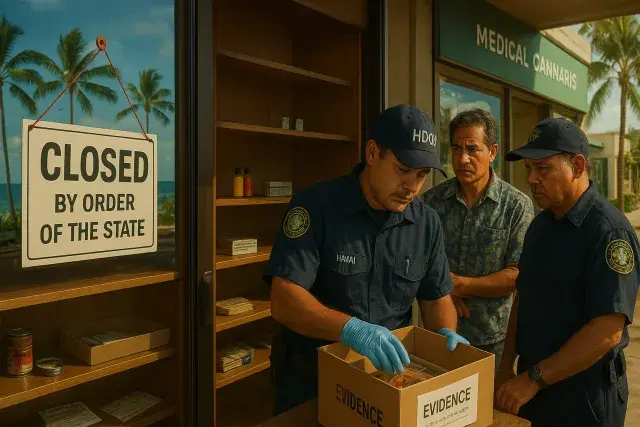
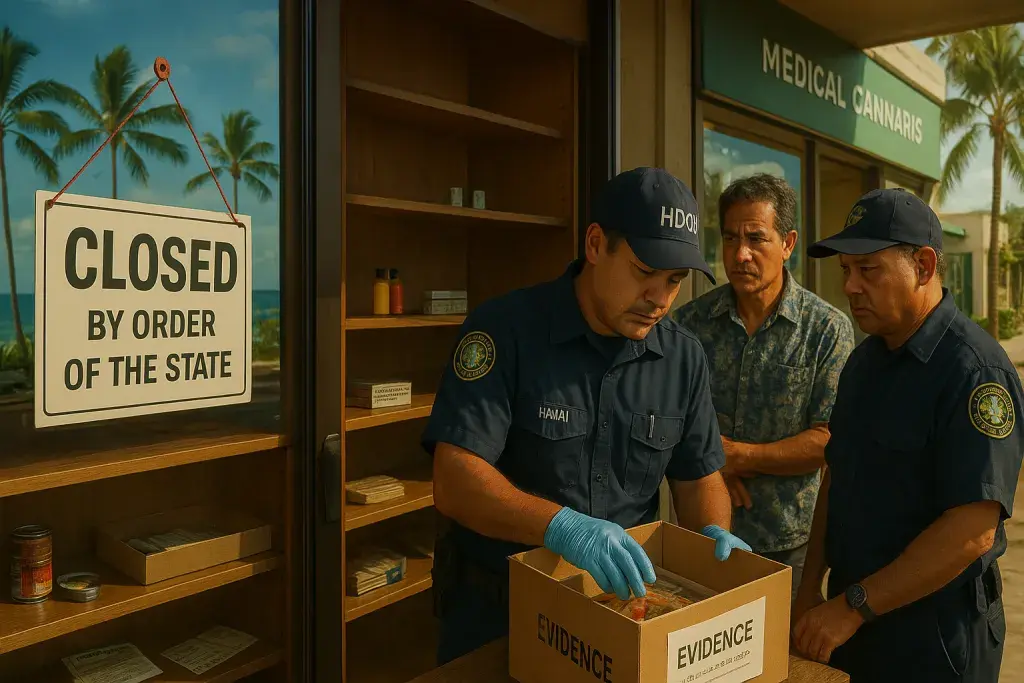
Hawaiʻi's Department of Health has moved to shut down sales of hemp-derived THC products - pre-rolled cigarettes, gummies, vapes and drinks - at retailers operating outside the state's licensed medical cannabis dispensary system. The enforcement, which began in July under Act 269 and new administrative rules, has emptied shelves at shops across Oʻahu that had spent years selling intoxicating hemp products under a gap in federal law. For operators like Lance Alyas, owner of Oʻahu Dispensary and Provisions, the crackdown isn't an abstraction - it's a lawsuit now sitting in federal court and a payroll of 20 employees he says is at risk.
The underlying tension here is a familiar one to anyone who has watched regulated cannabis markets mature on the mainland: a licensed, tightly controlled channel competing against a parallel market that grew up faster and cheaper because it wasn't subject to the same testing, packaging or seed-to-sale tracking requirements. Hawaiʻi's eight licensed medical dispensaries operate under strict compliance regimes - lab testing, compliant packaging, inventory controls - while unlicensed hemp retailers, until now, didn't answer to the same Office of Medical Cannabis Control and Regulation. That asymmetry matters for any operator thinking about point-of-sale infrastructure and inventory reporting; the same logic that pushes regulators toward mandatory registration and inspection in Hawaiʻi is playing out in other jurisdictions building out compliant retail systems, including markets that rely on tools like cannabis pos saskatchewan operators use to keep transaction and compliance records auditable from day one. cannabis pos saskatchewan
A Farm Bill Loophole Meets State Law
The root of this fight traces back to the 2018 Farm Bill, which legalized hemp containing no more than 0.3% delta-9 THC by weight. That threshold, intended to distinguish industrial hemp from marijuana, instead opened the door to a nationwide industry of intoxicating hemp-derived products - gummies, beverages, vapes - manufactured to stay just under the federal THC cap while still delivering a psychoactive effect. Hawaiʻi passed a law in 2020 legalizing hemp cultivation but not the sale of hemp-derived THC products for consumption. For years, though, enforcement lagged behind the market. Unlicensed retail locations on Oʻahu reportedly grew from a handful in 2024 to several dozen within roughly a year, cutting into revenue that would otherwise flow to the state's licensed dispensary network.
Licensing, Protectionism, and the Consumer Safety Argument
Alyas argues the state is running economic protection for an eight-license oligopoly rather than genuinely policing product safety. It's a fair question to raise: Hawaiʻi capped medical dispensary licenses at eight back in 2015, and expansion since then has come through allowing existing licensees to add locations rather than issuing new licenses outright. Lawmakers counter that the issue isn't market share - it's that hemp-derived THC products sold outside the licensed system haven't gone through the same COA-backed lab testing required of medical cannabis. That's not a trivial distinction for consumer safety; potency inconsistency and contamination risk are real concerns in any unregulated cannabinoid market, hemp-derived or otherwise. Whether the state's remedy properly balances those safety concerns against interstate commerce protections for federally legal hemp is now a question for a federal judge.
A Narrowing Window Either Way
Congress may render much of this moot. A 2025 federal measure redefines hemp in ways that would close the loophole enabling intoxicating hemp products nationally, with an effective date pushed to December. For multi-state operators, brands, and wholesalers who built supply chains around hemp-derived THC, that's a compliance deadline worth tracking closely - reformulation, relabeling, or exiting certain SKUs may all be on the table depending on how the final rule lands. For Hawaiʻi's licensed dispensaries, the federal shift could cement the very market consolidation the recent state enforcement action set in motion, regardless of how the lawsuit resolves.