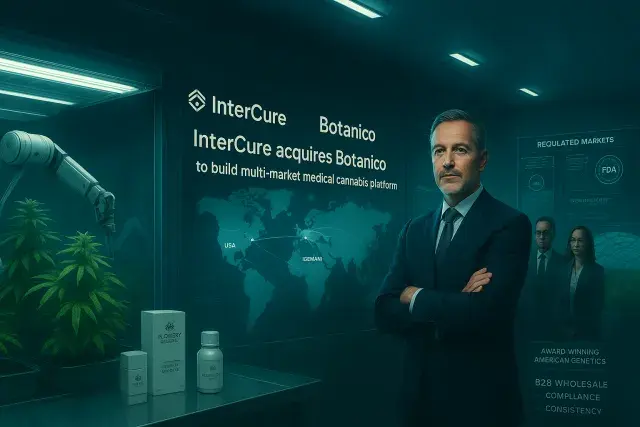
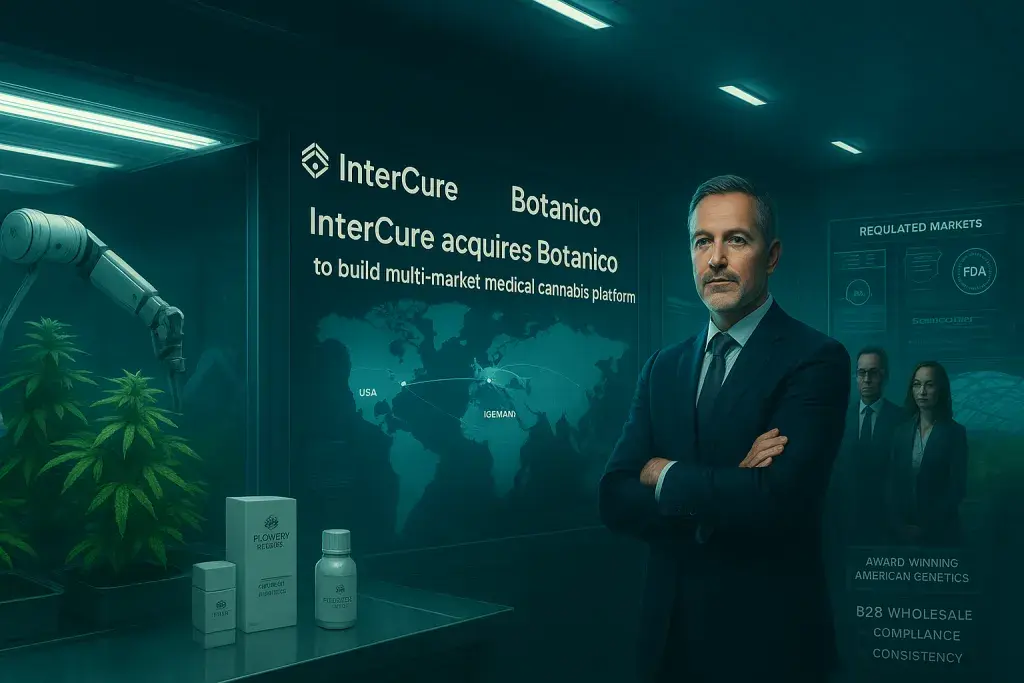
InterCure Ltd., the Israel-based medical cannabis company operating under the Canndoc brand, has completed the first tranche of its acquisition of Botanico Ltd., an Israeli cannabis technology and brand company better known as ISHI. The deal brings InterCure exclusive rights to a portfolio of American cannabis genetics, proprietary strains, premium brands, and AI-driven production systems - assets the company says position it for expansion across regulated medical markets in Europe and, potentially, the United States. The announcement, made June 15, 2026, signals that InterCure is moving beyond its Israeli and German footholds with a more deliberate international posture.
The mechanics of the transaction are straightforward enough: InterCure will issue 2,471,061 ordinary shares at initial closing, with an additional 2,470,073 shares to follow upon satisfaction of conditions in the share purchase agreement. What's more consequential for B2B observers, though, is what Botanico actually brings operationally. ISHI's automated production systems and AI-driven cultivation technologies represent the kind of infrastructure that vertically integrated operators - from licensed producers to multi-state operators running their own dispensary pos maine deployments - have come to treat as a baseline for scaling without sacrificing product consistency or compliance traceability. Botanico also carries exclusive strategic brand alliances with U.S. cannabis operators, including The Flowery, a Florida-based premium brand.
That U.S. connection matters for a specific regulatory reason. Following federal rescheduling of certain state-licensed medical cannabis from Schedule I to Schedule III, InterCure has opened a formal strategic review of opportunities in regulated U.S. medical cannabis markets. The company is being deliberate about scope - its evaluation is focused exclusively on the medical side, not adult-use. That's a meaningful distinction. The rescheduling development does not create a federal green light for commercial cannabis operations, but it does alter the tax and business-compliance calculus for licensed medical operators in meaningful ways, including potential relief from the burden of Section 280E of the Internal Revenue Code, which historically prevented plant-touching cannabis businesses from deducting ordinary business expenses. For any international operator eyeing U.S. entry, understanding that regulatory framework - and the state-level licensing structures that still govern everything from seed-to-sale tracking to compliant packaging - remains non-negotiable groundwork.
German Market Momentum Adds a Third Revenue Pillar
InterCure's U.S. ambitions are backed by a growing international revenue base. The company reported its first meaningful revenues from the German medical cannabis market earlier this year - a market that expanded significantly following Germany's regulatory reforms around medical access. To build on that, InterCure has appointed a dedicated German management and sales team and is anticipating multiple product launches in the second half of 2026. Germany operates under strict pharmaceutical-grade standards for medical cannabis, and InterCure's GMP-certified production through Canndoc positions it to meet those requirements. Good Manufacturing Practices certification is not a checkbox item in European regulated markets; it functions as the cost of entry and a primary differentiator in wholesale supply negotiations.
What the Botanico Deal Means for B2B Operators Watching U.S. Expansion
For licensed U.S. cannabis businesses - wholesalers, multi-state operators, and technology vendors assessing international partnership opportunities - the InterCure-Botanico transaction illustrates a pattern worth tracking. International cannabis companies with GMP infrastructure and pharmaceutical-grade production credentials are actively acquiring access to American genetics, production IP, and brand relationships. The Botanico deal packages all three. Access to award-winning American cannabis genetics, combined with automated production systems, could shorten the product development timeline for any operator moving into new regulated jurisdictions. That's not a small thing in a market where compliant product launch timelines are often measured in quarters, not weeks.
InterCure CEO Alexander Rabinovitch framed the company's direction plainly: building a leading international medical cannabis company serving patients across multiple regulated markets. The word "patients" is doing real work in that sentence. InterCure's positioning is pharmaceutical, not recreational - a distinction that shapes everything from product development standards and labeling compliance to how the company engages regulators in new markets. Whether the U.S. strategic review produces actionable entry points will depend on how state-level licensing structures and the federal rescheduling implementation interact over the next 12 to 24 months. That outcome is genuinely uncertain. In practice, though, companies that have already built the compliance infrastructure - GMP certification, seed-to-sale documentation, pharmaceutical-grade quality controls - will be better situated to act quickly if regulatory windows open.
The Broader Signal for International Cannabis Business
InterCure's multi-front expansion - Israel as home base, Germany as a live international revenue market, and the U.S. under active review - reflects a structural shift in how serious licensed cannabis operators are approaching global market development. This is no longer about opportunistic licensing plays. It's about building durable supply chain and brand infrastructure that can clear pharmaceutical regulatory bars in multiple jurisdictions simultaneously. For U.S.-based cannabis businesses, the practical implication is this: international operators with capital, GMP credentials, and proprietary genetics are becoming legitimate competitors - and partners - in the regulated medical space. Watching how InterCure deploys the Botanico assets over the next several quarters will offer a real-time case study in cross-border cannabis B2B strategy.