Lesotho earned its place in cannabis history in 2017 as the first African country to issue a licensed medical cannabis cultivation permit - a milestone that circulated widely and that many travelers have since misread as a signal of broad legal tolerance. It was not. Recreational cannabis remains fully illegal for residents and tourists alike under the Drugs of Abuse Act, and the gap between the country's cultural familiarity with the plant and its formal legal framework carries real consequences for anyone who crosses the border without understanding the distinction.
That confusion is worth understanding in structural terms, because it follows a pattern familiar to anyone who tracks cannabis compliance across jurisdictions. Medical licensing frameworks - whether in Lesotho, Germany, or Thailand - create legal pathways for cultivation, pharmaceutical processing, and registered patient access. They do not create recreational access, and they rarely extend to foreign visitors. The operational and regulatory architecture built around medical cannabis, from patient registration to licensed dispensary access, is designed for a defined domestic patient population. Tourists are not that population. For context on how dispensary licensing and point-of-sale compliance work in mature regulated markets, resources covering the best cannabis pos systems california operators use illustrate just how tightly controlled licensed retail access can be even where adult use is fully legal - Lesotho's medical-only framework is considerably more restrictive than that.
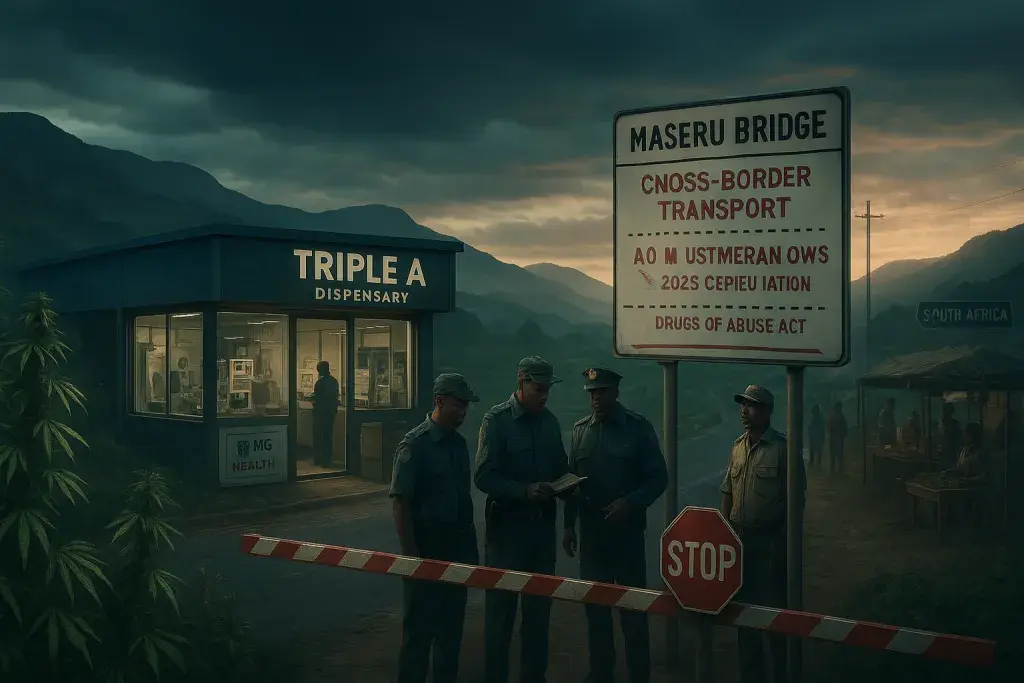
The only known licensed dispensary in Lesotho - Triple A Dispensary in Maseru - operates under the country's medical cannabis patient registration system. There is no verified tourist-access pathway under current law. Herb could not confirm that foreign visitors qualify for patient registration under the existing framework, and travelers should not assume otherwise. The informal market operates visibly across much of the country, but visibility is not legality, and confusing the two is how people end up in enforcement situations they did not anticipate.
Where the Real Enforcement Risk Sits
Inside Lesotho, enforcement of personal possession laws is reported as rare and inconsistent. The country has a long and culturally embedded relationship with cannabis - the plant has been grown in the Maluti highlands since at least the 16th century, and the Sesotho term matekoane reflects how thoroughly it belongs to the local material culture. Enforcement capacity is limited, stigma is low, and the informal market operates with a visibility that can create a misleading sense of practical tolerance.
The risk calculus changes entirely at the border. Every traveler entering or exiting Lesotho passes through a South African crossing. Maseru Bridge is the most heavily used. South African border officials enforce South African law; Lesotho officials enforce Lesotho law. Both countries treat cross-border cannabis transport as a serious criminal offense regardless of the quantity involved or the personal-use norms that apply on either side of the line. South Africa's Constitutional Court ruling and the Cannabis for Private Purposes Act created limited private-use protections within South Africa - they do not extend to cross-border movement. Travelers who have grown comfortable with cannabis under South Africa's framework and assume that comfort carries across into Lesotho and back again are operating on a legal assumption that neither country's law supports.
The Medical Export Industry Is a Separate Story
The 2017 licensing moment was real. Lesotho's Ministry of Health issued medical cannabis cultivation licenses recognizing that the country's highland growing conditions - elevations above 1,000 meters across the entire national territory, strong UV exposure, cool nights, and the distinctive genetics of the matekoane landrace strain - gave it a legitimate competitive position in the emerging global pharmaceutical cannabis supply chain. MG Health became the first African company to receive authorization to export medical cannabis to the European Union. That was a significant commercial and regulatory development.
In practice, though, scaling that opportunity has proven difficult. More than 150 licenses have reportedly been issued; a small fraction are operational, and fewer still export at commercial scale. The November 2025 Cannabis Regulations Amendment - Legal Notice No. 155 of 2025 - tightened the framework further, introducing stricter import-export controls, higher license fees, and more demanding lab testing and documentation requirements. Those changes have raised questions about access for smaller operators and community-based growers who lack the capital and compliance infrastructure to meet the new thresholds. The gap between licenses issued and operations actually running is a familiar dynamic in early-stage regulated cannabis markets; it reflects how high the compliance bar becomes once regulators move from enabling frameworks to enforcement-oriented ones.
What This Means for Cannabis Business Professionals Watching Emerging Markets
Lesotho's trajectory offers a clear illustration of how medical cannabis licensing frameworks evolve - and where they stall. The initial licensing decision was straightforward: recognize an existing agricultural reality, create a legal pathway, attract capital and pharmaceutical partnerships. The harder work is building the compliance infrastructure that makes those licenses functional at scale: chain-of-custody documentation, certified lab testing, GMP-equivalent production standards, and export documentation that satisfies both the Lesotho Ministry of Health and the destination country's pharmaceutical regulator.
For operators, investors, and compliance professionals tracking emerging cannabis export markets in Africa, Lesotho's 2025 regulatory tightening signals a maturation of the framework - but also a consolidation dynamic that tends to benefit well-capitalized operators at the expense of smaller cultivators. That pattern has played out in nearly every regulated cannabis market that moved from permissive early licensing to enforcement-driven compliance. The underlying genetics and growing conditions in Lesotho remain genuinely distinctive. Whether the regulatory environment can support a broad-based, compliant export industry - rather than concentrating production among a handful of large operators - is the question the 2025 amendments have sharpened rather than resolved.
For travelers, the summary is shorter: recreational cannabis is illegal in Lesotho, no tourist purchase pathway exists under current law, and the border carries real enforcement risk. The history is remarkable. The legal tolerance for casual visitors is not.