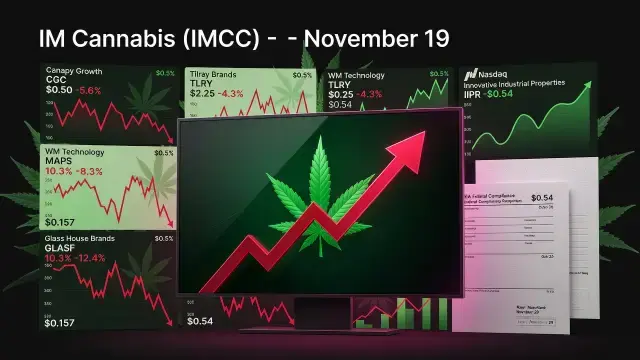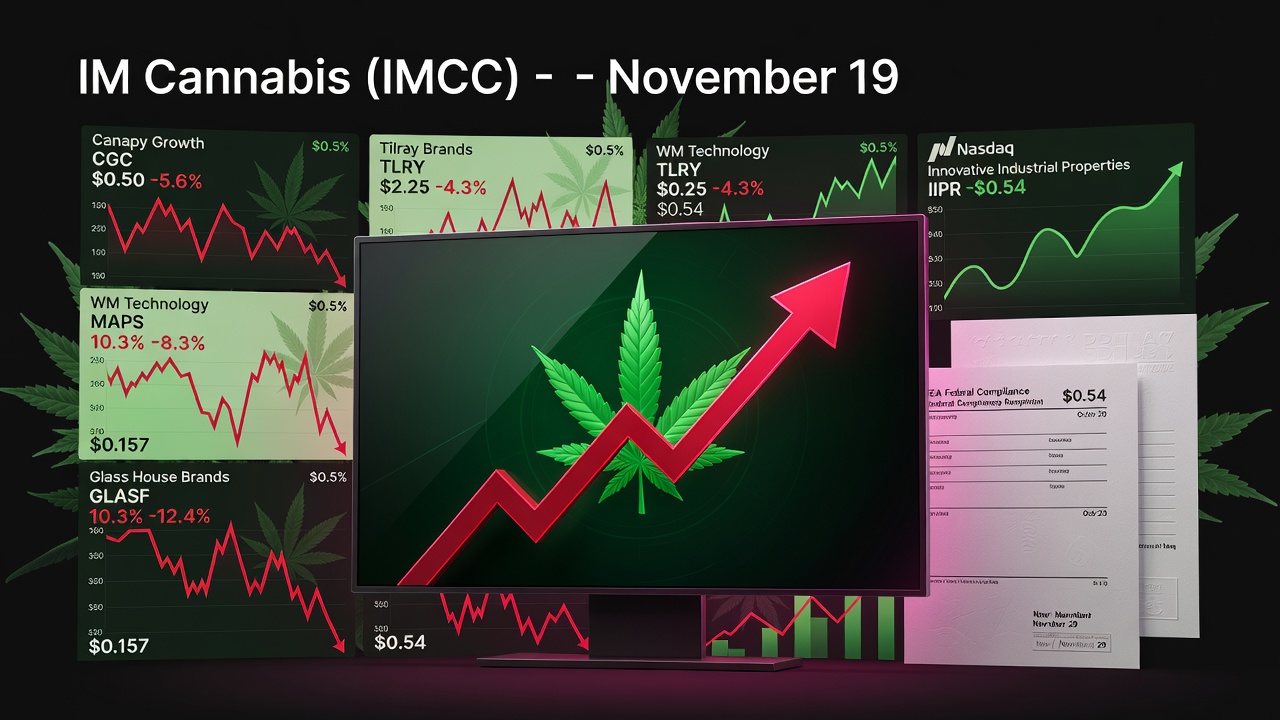
Cannabis equities broadly retreated Thursday, 19 November, with the AdvisorShares Pure US Cannabis ETF (MSOS) down 1.9% to $3.58 and the Amplify Alternative Harvest ETF (MJ) off 2.1% to $20.03. Breadth told the real story: just eight of the 35 tickers tracked traded higher, one sat unchanged, and 26 slipped into the red. Against that backdrop, IM Cannabis (IMCC) stood out as the session's top gainer, up 8.5% to $0.54 - a move tied directly to a corporate action rather than market sentiment.
A Second Reverse Split Inside Four Months
IM Cannabis's board has approved a 1-for-3 reverse stock split, effective 23 November, according to Investing.com. The stated purpose is compliance with Nasdaq's $1.00 minimum bid price rule - a standard listing requirement that forces thinly traded small-caps into periodic share consolidations just to stay on the exchange. Here's the catch: this isn't IM Cannabis's first attempt. The company completed a 30-for-1 consolidation in August, and that prior action now disqualifies it from Nasdaq's standard 180-day cure period. In plain terms, the company has less runway and less margin for error this time around.
Reverse splits don't change underlying business fundamentals; they reduce share count and proportionally raise per-share price. For operators and investors watching compliance-driven cannabis listings, the mechanism matters less than the signal. A company returning to this tool twice in under half a year is telling the market that organic price recovery hasn't materialized, and that exchange compliance, not growth, is driving the calendar. Whether the post-split shares hold above $1.00 once trading resumes on 23 November is the real test - not the split itself.
Canopy Growth Faces the Same Threshold Problem
IM Cannabis isn't alone in this exercise. Canopy Growth (CGC) traded at $0.50, down 5.6%, sitting well below the same $1.00 Nasdaq floor. Tilray Brands (TLRY) closed at $2.25, down 4.3%, a level below the $2.30 that GuruFocus cited as its 52-week low days earlier. Tilray did clear one governance milestone, re-electing Irwin Simon and two other Class II directors at its annual meeting on 18 November. Fair enough, as far as board stability goes. But stable governance and a depressed share price are two different problems, and multi-state operators watching Canadian licensed producers should note that compliance-threshold pressure is now a recurring theme across the sector, not an isolated event.
Why Listing Compliance Is a Business Risk, Not Paperwork
For cannabis operators, a Nasdaq delisting risk carries consequences beyond optics. Delisting can trigger loan covenant defaults, limit institutional ownership, and cut off access to capital markets precisely when companies need liquidity for inventory, payroll, and 280E tax obligations. Investors tracking cannabis equities should treat reverse splits as a flag worth investigating, not a routine technicality. The questions worth asking: Is revenue growing independently of share structure? Is the company raising capital, or defending its listing? IM Cannabis and Canopy Growth currently sit on opposite sides of the same threshold, and the next few trading sessions will show whether consolidation alone is enough to hold the line.
Other Movers Worth Watching
- WM Technology (MAPS) fell 10.3% to $0.157 after missing third-quarter earnings and revenue estimates, with no new filing explaining the broader drop.
- Glass House Brands' legacy OTC quote (GLASF) showed a 12.4% decline, but the company now trades on the NYSE under GLAS; the OTC figure should be read with caution.
- Innovative Industrial Properties (IIPR) held above $50, underscoring relative stability among cannabis-focused REITs compared to plant-touching operators.
The federal backdrop remains the fixed point for US operators. The DEA's first registrations for state-licensed medical dispensaries, issued 30 October, come with a 29 November deadline for medical businesses to confirm compliant supply chains, per law firm Buchalter. That date is now ten days out, and it will likely shape sentiment more than any single reverse split.