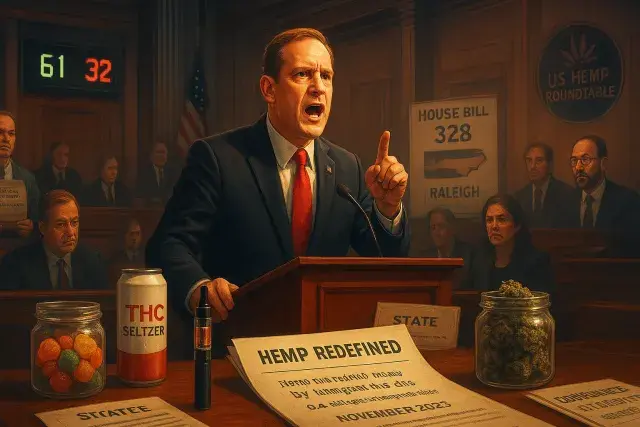
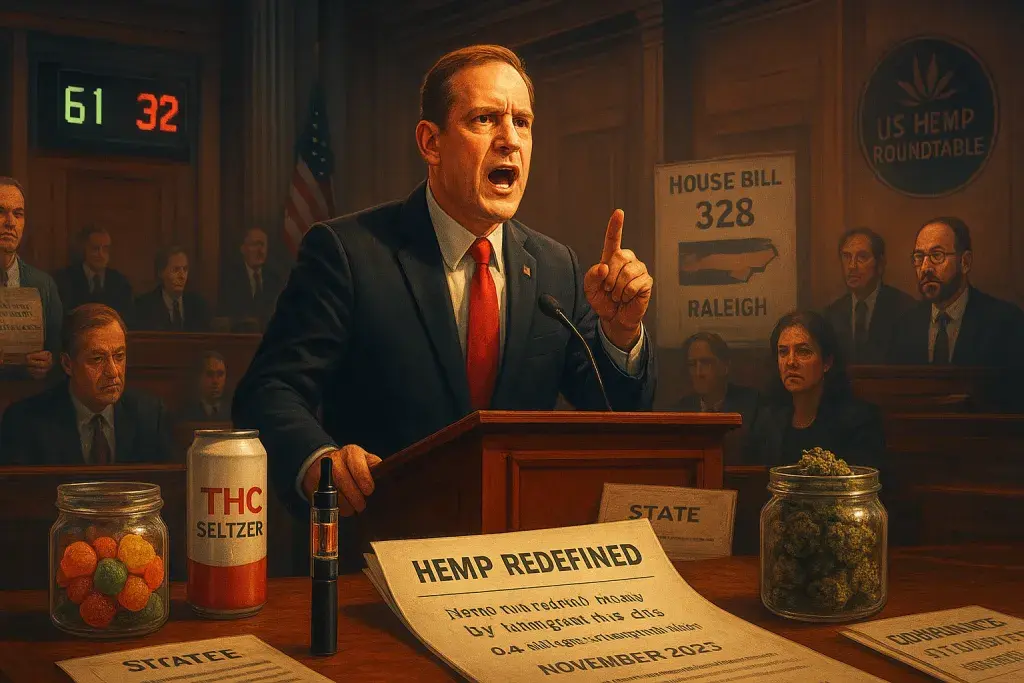
The Senate voted 61-32 on Aug. 8 to table an amendment from Sen. Ted Budd, R-N.C., that would have stripped a 30-day delay on federal restrictions targeting intoxicating hemp products. The underlying continuing resolution now pushes the effective date of the Nov. 12 hemp crackdown to Dec. 11, giving retailers, manufacturers, and state regulators a short reprieve - but not the certainty many in the industry had hoped for.
For dispensary operators and hemp retailers watching from state markets already navigating THC potency caps and shifting compliance regimes, the vote is a reminder that federal hemp policy remains unsettled even as deadlines loom. Retailers selling regulated cannabinoid products, whether under state adult-use programs or hemp-derived frameworks, already know how disruptive a shifting compliance calendar can be for inventory planning, supplier contracts, and point-of-sale configuration. Operators managing multistate footprints have learned to treat regulatory dates as moving targets, which is one reason platforms offering POS software for Ohio cannabis retailers have built flexibility into tax logic and SKU management rather than hardcoding a single fixed rule set. POS software for Ohio cannabis retailers
What the Federal Law Actually Changes
The underlying statute, approved in November 2025, redefines hemp based on total THC rather than delta-9 THC alone, and it excludes finished hemp-derived products containing more than 0.4 milligrams of combined total THC and similar cannabinoids per container. That threshold is tight enough to sweep out most delta-8 gummies, THC seltzers, vapes, and THCA flower currently sold in convenience stores, smoke shops, and some grocery outlets. The law was set to take effect 365 days after enactment - Nov. 12, 2026 - until the continuing resolution's Section 2019 pushed that date back by a month.
Budd's amendment, S.Amdt. 6747, would have struck that delay outright. His argument centered on public safety: he cited North Carolina data showing cannabis-related emergency department visits among minors rose sharply between 2017 and 2025, and he pointed to packaging that mimics popular snack and candy brands as evidence the market has drifted far from any reasonable interpretation of the 2018 Farm Bill's hemp carve-out. Fourteen cosponsors joined him, including Senate Republican leadership figures, which signals this isn't a fringe position within the GOP caucus - just not a majority one.
A Rare Bipartisan Split, and a White House Pushback
The 32 votes against tabling Budd's amendment crossed party lines almost evenly - 21 Republicans, 11 Democrats - which tells you this fight isn't breaking down along the usual ideological seams. It's a retail-regulation fight, not a culture-war fight, and that distinction matters for anyone trying to predict where Congress lands next. The Trump administration, meanwhile, backed the delay. CMS Administrator Dr. Mehmet Oz warned that letting the broader restrictions take effect on schedule could complicate recent efforts to expand access to full-spectrum hemp-derived CBD for seniors and people with disabilities - an argument Budd rejected, asking why medical CBD access required leaving intoxicating products on convenience store shelves.
A coalition of 105 organizations, including the US Hemp Roundtable, the National Association of Convenience Stores, and several North Carolina hemp and hospitality groups, urged Senate leadership to preserve the delay, framing the extra month as breathing room for Congress to legislate stronger guardrails - age limits, synthetic cannabinoid import restrictions, manufacturing standards - rather than a blunt-instrument ban.
North Carolina's Parallel, Unresolved Fight
Back home, Budd's push mirrors a stalled state effort. House Bill 328 would write the same 0.4-milligram total THC ceiling directly into North Carolina law, along with a 21-and-older sales restriction, effectively removing most THC beverages, vapes, and THCA flower from store shelves regardless of what Congress ultimately does. The Senate approved the conference report 37-6 back on July 2, but the House has repeatedly declined to act, and the bill is now parked in the Rules Committee. House Speaker Destin Hall has acknowledged lawmakers broadly agree the current unregulated market can't continue but remain split on the remedy.
For hemp retailers and compliance teams, the lesson from both Washington and Raleigh is the same: don't assume any single deadline is final. Build inventory, labeling, and lab-testing protocols around the strictest plausible standard, because state law can outlast federal delays - and a 30-day reprieve in Congress offers little comfort to a business that still has to answer to its own state legislature.