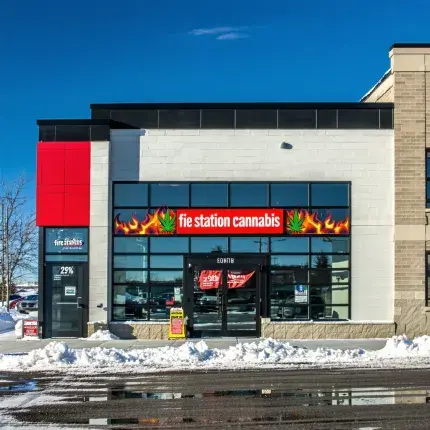

The Fire Station Cannabis Co. is opening its tenth Michigan storefront in Menominee on Feb. 14, 2025 - Valentine's Day, as it happens - marking a significant expansion for the Upper Peninsula-owned retailer that has spent the better part of the last decade building what it calls a cannabis superstore model across the region. The Menominee location, at 3101 10th St., has been operating curbside-only for nearly two years; Friday's grand opening finally lets customers through the door.
What Customers Are Walking Into
The Menominee store is the chain's largest by floor space, with the biggest budroom across all ten Fire Station locations - a meaningful distinction in a retail category where the shopping experience increasingly drives brand loyalty as much as product selection does. Hours run 9 a.m. to 9 p.m., seven days a week, with both in-store shopping and curbside pick-up available.
Store general manager Mikhael Parrson emphasized the staff angle in a statement ahead of opening: customers should expect knowledgeable floor staff ready to walk through the product assortment. That's table stakes for any serious cannabis retailer now, though execution varies considerably in practice. The budtender relationship - part sales, part harm-reduction conversation - has become one of the primary ways consumers learn about dosing, product formats, and the real differences between cultivars, terpene profiles, and consumption methods. A well-trained floor team matters more than it might in, say, a conventional specialty retail context.
Opening Promotions and the Giveaway Running Through February
The Fire Station is pulling out the full grand-opening playbook. From Feb. 14 through Feb. 28, all customers receive 20% off storewide. The first 100 customers each day receive a free gift with purchase, while supplies last - which means early mornings will likely draw a crowd in the first few weeks. A formal ribbon-cutting ceremony is scheduled for Feb. 26 at 9 a.m., in conjunction with the Marinette Menominee Area Chamber of Commerce.
Running alongside the grand opening is the "Heart on Fire" Giveaway: one winner receives $1,000 in store credit and gets to designate a local non-profit to receive a matching $1,000 donation. The community-giving component is notable - not just as marketing, but as a signal of how regional cannabis operators have increasingly leaned into local identity and civic participation to differentiate themselves from multi-state operators. Entries are available in-store or at thefirestation.com/contest.
What Ten Locations Means for a U.P. Brand
Here's the thing: reaching ten storefronts as an independently owned, regionally rooted cannabis company in Michigan is not a given. The legal Michigan market, which opened for adult-use sales in late 2019, moved fast - and drew significant investment from large multi-state operators who had capital and infrastructure that smaller, local businesses simply couldn't match overnight. The Fire Station, co-owned and co-led by Logan Stauber and Stosh Wasik, built its footprint in the Upper Peninsula, a region that is geographically vast, relatively sparsely populated, and not always the first target for retail expansion of any kind.
Getting to ten stores - and choosing Menominee, a city of roughly 8,000 residents on the Wisconsin border, as that milestone location - reflects a deliberate regional strategy. Menominee sits directly across the Menominee River from Marinette, Wisconsin, and serves customers from both sides of a state line where cannabis law diverges sharply. Wisconsin has not legalized recreational cannabis. That geography isn't incidental to the business case.
Co-owners Stauber and Wasik, in a joint statement, called out the two-year curbside-only run specifically: "After almost two years of successful curbside service, we are thrilled to welcome customers inside the U.P.'s cannabis superstore in Menominee." The patience embedded in that timeline - building a customer base and operational reputation before expanding the physical footprint - is worth acknowledging. Full in-store operations require more staff, more compliance overhead, and a more demanding customer experience than curbside alone. It's a step up, not just a ribbon-cutting.