Federal student loan policy is moving quickly, and borrowers who don't keep pace risk missing deadlines, losing repayment options, or misunderstanding what their program's funding eligibility actually looks like. Between a new earnings test for degree programs, revised borrowing caps, and the scheduled end of several income-driven repayment plans, the rules governing how Americans pay for college have changed more in the past year than in the prior decade combined.
The earnings test won't blacklist your major, but it will change the calculus
The Student Tuition and Transparency System and Earnings Accountability rule, commonly called the college earnings test, ties a program's eligibility for federal student loans to whether its graduates out-earn people without that credential. Undergraduate programs are measured against high school graduates; graduate programs against bachelor's degree holders in comparable fields. Fail the median-earnings threshold two years out of three, and a program loses access to federal loan dollars - not its accreditation, not its right to operate. Students could still pay through private loans, though financial aid offices generally advise exhausting federal options first, given the stronger borrower protections and income-driven repayment choices attached to federal debt. The rule doesn't take effect until July 2027, with funding losses possible no earlier than 2028, so there's runway here. Research cited from the think tank Third Way suggests the rule will mostly catch for-profit institutions, with most associate's, bachelor's, and master's programs clearing the bar.
New borrowing caps mean more students will hit a wall
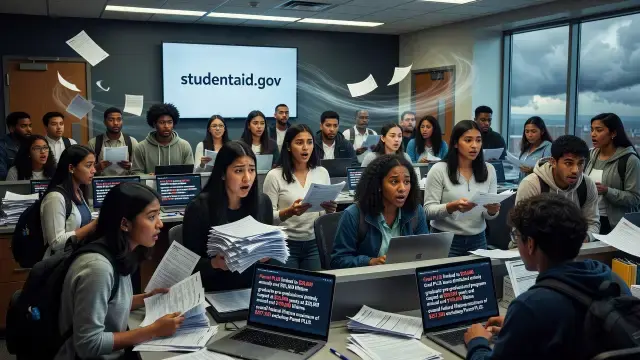
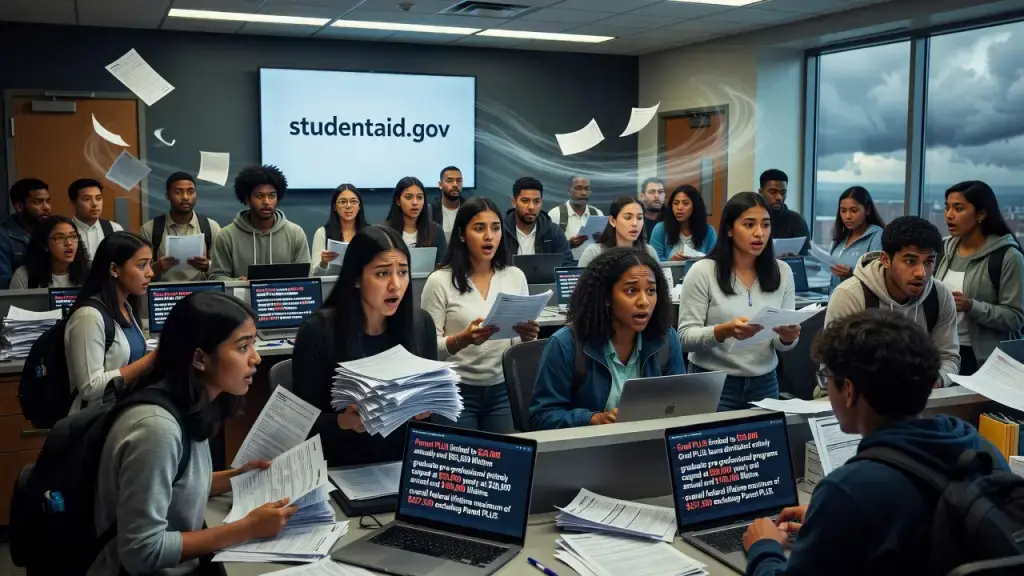
Starting July 1, 2026, new federal loan limits took hold. Parent PLUS loans are now capped at $20,000 annually and $65,000 over a lifetime. Grad PLUS loans disappeared entirely; graduate borrowers face $50,000 annual and $200,000 lifetime caps for pre-professional programs like law or medicine, and $20,500 annual, $100,000 lifetime caps for other graduate degrees. The overall federal lifetime maximum, excluding Parent PLUS, sits at $257,500. Here's the catch: these caps don't retroactively apply to current graduate students, who can keep borrowing up to their cost of attendance until they finish or hit three years, whichever comes first - provided they don't switch programs or schools. The gap between tuition costs and what federal loans now cover is expected to push more students toward private lenders, which carry fewer borrower protections and no income-driven repayment safety net.
Repayment plans are consolidating, and SAVE borrowers must act
New borrowers after July 1, 2026, choose between a Standard Repayment Plan and the new Repayment Assistance Plan, which bases payments on 1% to 10% of adjusted gross income over a 30-year term. Older plans - Income-Contingent Repayment and Pay As You Earn - remain available to existing borrowers but sunset in 2028. The SAVE plan, after years of litigation, was ordered to end early by a federal appeals court. Borrowers on SAVE will get a 90-day window from their loan servicer to pick a new plan before being defaulted into Standard Repayment or the new Tiered Standard Plan. Anyone nearing loan forgiveness while on SAVE needs to formally switch plans before discharge can process - missing that step could stall forgiveness even after qualifying payments are made.
FAFSA timing matters more than ever
The FAFSA for 2027-2028 opened earlier than the typical October 1 date, available now at studentaid.gov. Given that some institutional and state aid is awarded first-come, first-served, filing early carries real financial weight beyond simply meeting the federal deadline of June 30, 2028. New features this cycle include text-message invitations for contributors and, later in the fall, pre-populated data for returning applicants. None of this changes the fundamental advice: file every year, file early, and don't assume last year's numbers still apply.